Showing posts with label Book Review. Show all posts

Thursday, May 7, 2020

Book Review: Affluenza - Clive Hamilton

Has been a while since I've had time for a book review. Not so much because I haven't had time to read but due to the time I've spent dwelling on the recent current affairs and state of the world. Finally finding a brief respite amidst the turmoil, comes another book review, Affluenza, When Too Much is Never Enough by Clive Hamilton and Richard Denniss. Surprisingly it was recommended to me by Mr A quite a few years ago rather than my ボーイフレンド .


Reading it after The Millionaire Next Door, I found that it built upon a lot of those foundations and provided a more in depth analysis on the spending habits of the the majority who live in first world western society. As you can probably guess by the title, Affluenza is a portmanteau affluence and influenza, it covers the topic of over consumption in our current culture. The premise of the book considers how we are often conditioned by media and more recently, social media to aspire to the lifestyles of the rich and famous and at the cost of our mental wellness and financial future. It covers the vast amount of possessions that we buy each year, upgrading to the newest, fanciest model of accessory whilst throwing out an unprecedented amount of waste. In the end it presents a message of downsizing, weighing up what is an essential rather than shallow desire to ensure that we can live a more fulfilling and fruitful life. It also means that for those who are stuck in jobs that they do not enjoy as much, they can become financially independent and retire earlier.

In a nutshell, affluenza can be encapsulated in the following:

 “We buy things we don't need with money we don't have to impress people we don't like.”
― Dave Ramsey

by 小福

Friday, April 17, 2020

Book Review: The Millionaire Next Door - Thomas J Stanley and William D Danko

As the turmoil starts to subside, and the VIX falls back to 40 after some all time highs I'd 80, I finally have some time to go back to some general reading without having to follow current affairs like a hawk every day, so of course it is time for another book review(´。• ω •。`).

The Millionaire Next Door by Thomas Stanley and William Danko was actually recommended to me by ボーイフレンド during our first date(=`ω´=). Of course I went home and read it all within a matter of days and it proved to be more insightful than I expected.

Image result for millionaire next door

Essentially the book covers some studies that were done on households with a net worth over one million dollars and compares the behaviour and habits of Under Accumulators of Wealth and Prodigious Accumulators of Wealth. In terms of spending, PAWs are far more likely to spend significantly less than they earn and they also tend to make considerably less purchases of luxury goods and status items (・_・)ノ. The book shows surprising evidence that the supposedly wealthy people you see living in lavish mansions driving luxury vehicles are often only able to do so via debt, leaving them with a considerably reduced net worth. As someone who doesn't really indulge in luxury goods, it served as a firm reminder that the sacrifices that I was making towards my goals were worthwhile. In summary, the book demonstrates that with hard work, discipline and prudence, almost anyone living in a first world country can attain millionaire status.

It was quite eye opening to me when thinking about friends and family around me and considering what their underlying financial situation was. For instance, I have a beloved relative who inadvertently ticks all the boxes of a UAW whilst I had never noticed it in the past (〃>_<;〃)  and I have a work colleague who appears to be very low key pragmatic but is almost a textbook exemplar of a PAW. Guess I know who to go to for advice in the future╰(*´︶`*)╯ .

One surprising fact that I did also note, which turns out to make sense when you think about it, is the concept that offering financial aid to children often results in financially underperforming children who become entitled to the regular handouts. For people considering raising a child, this is also quite sobering and offers ideas as to how to raise your child to ensure they become PAWs.

For those who are interested, Thomas Stanley and his daughter Sally Stanley Fallaw have recently published a follow up of the study, The Next Millionaire Next Door. Apparently the book demonstrates that in modern times it has become even easier to grow wealth than before. No doubt I will read it in due course („• ֊ •„).

By 小福

Wednesday, February 5, 2020

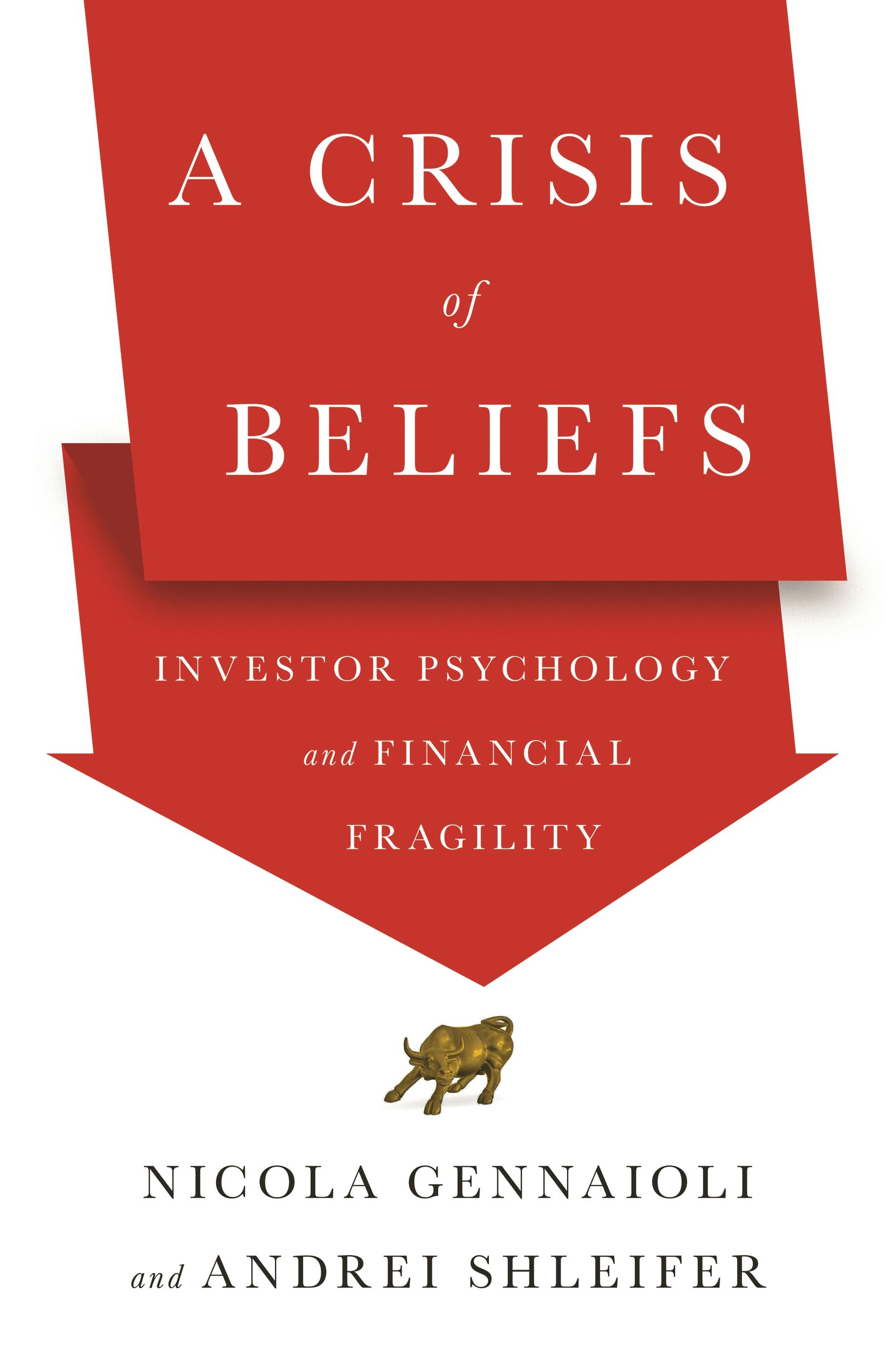
Book Review: A Crisis of Beliefs - Nicola Gennaioli and Andrei Shleifer

One of the first concerns I had to contend with before putting a considerable portion of my life savings into the stock market was the potential for market downturns. Having lived through the GFC, I was keen to have an understanding of the factors that lead to the last market crash, which is why "A Crisis of Beliefs" by Nicola Gennaioli and Andrei Shleifer caught my eye, so I had to check it out (✧ω✧) .

Image result for a crisis of beliefs

Basically the book creates a fairly complex mathematical model demonstrating how a failure to consider the downside risk coupled with financial fragility resulted in the crash that was the GFC. Although I found the book to be fairly technically advanced in its concepts and  formulas, I did appreciate the fundamental concepts it was based upon though.

In short, failure to consider downside risk means that the majority of the players in the market before the crash didn't give enough due consideration to what would happen in the worst case scenario (⇀‸↼‶). Tying it back to the principles of value investing, it would mean that you should always be certain of the true value of what you are buying rather than just joining in on mindless hype. As an analogy, say you bought shares of a farm, even if the paper value of the farm crashed to zero, you would still hold a (hopefully) revenue generating asset.

The second factor that was covered in the book related to financial fragility, specifically pertaining to how interconnected the components of the market are and how the failure to consider downside risk can lead to a death spiral of credit contraction, loss of liquidity and eventual crash (`ー´) .

Although I felt a little out of my depth reading this book, I found the basic gist of it easy enough to understand, and it will probably be a book that I return to when I am a bit more advanced in my studies.
By 小福 

Tuesday, January 21, 2020

Book Review: The Intelligent Investor - Benjamin Graham

I guess I will start off the first substantial post with a quick note on one of the first books I read when embarking on this journey, being the Intelligent Investor, by Benjamin Graham. Apparently this is known to be the bible of investing, and Graham is known as the father of value investing.

Related image

So my understandings of value based investing based upon reading the tome over the span of three weeks was largely about the importance of purchasing large common stocks when they are undervalued or have fallen out of favour with the general public. Paramount to this is asking yourself every time before you buy something whether or not you are getting good value for money and whether or not the asset you purchase is safe enough to retain value or has the potential to crash into oblivion.

Another albeit obvious finding that it pointed out was the duality of identity that comes with stock ownership. Simply put, when one becomes an owner of shares, you become a part owner of a business on one hand and also the owner of a (hopefully) appreciating asset. More than not it would seem that most investors tend to focus on the second identity and often forget the first. It just so happened today that I was reminded of this when I received a voting form in the mail today, the first I had ever received, which reaffirmed to me that as much as I hold very little to make much difference in any voting outcomes, it is still a good reminder that in making that purchase, I probably ought to take a stronger interest in the prosperity of the business whilst I still hold the equities.

Although these aren't particularly sophisticated or groundbreaking insights, they make for a solid foundation that I hope I do not forget in the pursuit of this venture.

By 小福